
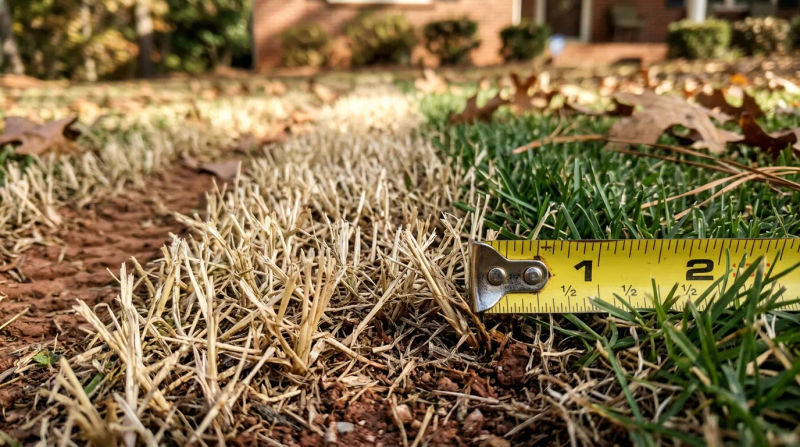
You step outside to admire your yard after a fresh mow, but something feels off. Instead of the lush, uniform green carpet you were expecting, you see disconcerting patches of brown, straw-like turf. In some spots, you might even see the soil peeking through. This jarring sight is a classic sign of a scalped lawn, a common but damaging issue that occurs when grass is cut too short. Especially here in Gordonville during October, as our hot, humid summer finally gives way to cooler air, this kind of stress can be particularly harmful. Your lawn is trying to store energy for the winter, and a severe scalping can weaken it significantly, leaving it vulnerable. This problem is more than just a temporary eyesore; it’s a sign of underlying stress that needs to be addressed correctly to ensure a healthy lawn next spring.
Common Signs and Symptoms
Identifying a scalped lawn is usually straightforward, as the damage is visible almost immediately after mowing. Our technicians are trained to spot these issues before they become severe, but homeowners can easily identify the warning signs as well. Look for these tell-tale symptoms:
- Brown or Yellowish Patches: The most obvious sign is the appearance of widespread brown or tan areas. This isn't dead grass (at least not yet); it's the exposed, tough lower stems of the grass plants that don't contain chlorophyll. The green, leafy part of the blade has been completely sheared off.
- Exposed Soil: In severe cases, the mower blades cut so low that they scrape away the grass entirely, exposing the bare dirt underneath. This creates a perfect opening for weed seeds to germinate.
- Uneven Color and Texture: Your lawn may look mottled, with patches of healthy green grass next to stripped, brownish areas. This often happens on uneven ground, where high spots get cut much shorter than the rest of the lawn.
- Visible Weed Infestation: Weakened, scalped turf can't compete with aggressive weeds. If you see a sudden explosion of crabgrass, clover, or other weeds in specific areas, it might be because the turf in that spot was scalped and thinned out.
In Gordonville, we often see these symptoms appear more prominently on properties with character. The beautiful, historic pre-1940s homes in the area are often set on expansive lots where the ground has settled over decades. This creates subtle undulations and high spots that are easily scalped by a mower deck that is set too low. The magnificent, mature trees common to these properties also create surface roots that push up the turf, creating another prime spot for scalping to occur.
What Causes This Problem
A scalped lawn isn't a disease; it’s a mechanical injury caused by improper mowing practices. Understanding the root causes is the key to preventing it from happening again. From my years of experience managing turf in Central Alabama, these are the most frequent culprits.
- Cutting Height Set Too Low: This is the number one cause. Many homeowners believe a shorter cut means mowing less often, but the opposite is true for lawn health. Each grass type has an ideal height range. Cutting below that range removes too much of the blade, which is the plant's food factory. This is why knowing the proper grass cutting height in Gordonville for your specific turf is critical. For instance, Bermuda grass can tolerate a lower cut, but cutting it too short, especially in a hot humid climate, invites stress and disease.
- Infrequent Mowing: Life gets busy, and it's easy to let the lawn get a little shaggy. However, when you finally mow, you're forced to remove more than the recommended one-third of the grass blade's height. This shocks the plant and is a form of scalping, even if the mower deck is at a technically correct height for the grass type.
- Uneven Terrain: As mentioned, the lovely, established lawns around Gordonville's older homes are rarely perfectly flat. Small hills, mounds, dips, and large tree roots can cause the mower wheels to drop or rise, resulting in the blade gouging the turf in high spots. A standardized mowing process involves being aware of the property's specific terrain and adjusting accordingly.
- Dull Mower Blades: Sharp blades deliver a clean, surgical cut. Dull blades don't cut; they rip and tear the grass. This shredded tissue is more susceptible to disease and water loss, and the stressed, frayed appearance can look a lot like scalping.
- Improper Seasonal Adjustments: Your mowing strategy needs to adapt with the seasons. A common mistake is maintaining a short, mid-summer cutting height deep into the fall. For an effective October cutting schedule for bermuda grass, for example, you should gradually raise the cutting height. This allows the plant to build up energy reserves for winter dormancy. A late-season scalp can severely hinder this crucial process.
When to Call a Professional
For a small, accidental scalped patch, a homeowner can often manage the recovery. The steps are straightforward: water the area deeply but infrequently to encourage root recovery, and most importantly, raise your mower height for all subsequent mows. However, there are many situations where the problem is more complex and trying to fix lawn scalping in a hot humid climate requires more expertise.
You should consider contacting a qualified professional if you encounter any of the following:
- Widespread Damage: If more than a quarter of your lawn shows signs of scalping, the stress on the turf system is significant. A professional assessment can determine the best course for recovery without causing further damage.
- Persistent Bare Spots: If the scalped areas aren't showing signs of recovery after a few weeks, there may be an underlying issue with soil compaction or nutrient deficiency that a professional can diagnose.
- Significant Terrain Issues: If your property has major undulations or is dotted with surface roots from mature trees, a standard residential mower may not be able to provide an even cut. Our experienced crews use equipment designed to handle varied terrain, ensuring a consistent height and preventing repeated scalping on high spots.
- You're Unsure of Your Grass Type: Different grasses have vastly different needs. A professional can identify your turf and create a season-specific mowing plan, including the proper grass cutting height in Gordonville, to keep it healthy year-round.
- Weeds Have Taken Over: Once weeds get a foothold in the bare, scalped areas, they can be very difficult to control. A professional service can implement a post-emergent weed control strategy while simultaneously promoting healthy turf growth to naturally crowd out future weeds.
Experienced professionals follow a systematic approach. Technicians are trained to assess terrain on every property and adjust equipment to prevent scalping. This consistent, knowledgeable approach is the best defense against chronic lawn stress.
Conclusion
A scalped lawn is a clear signal that your mowing routine needs a change. It's caused by cutting too low, waiting too long between mows, or navigating uneven ground improperly. While it's a frustrating sight, the good news is that it's both preventable and fixable. By adhering to the one-third rule, using sharp blades, and adjusting your mowing height and frequency for the season, you can protect your turf from this damaging stress.
Especially in October, it’s important to act quickly. Addressing the problem now gives your grass a chance to heal and build strength before winter dormancy sets in. Leaving a scalped lawn to fend for itself can result in a thinner, weaker turf stand that will be highly susceptible to a major weed invasion next spring. Taking proactive steps today is an investment in a healthier lawn for tomorrow.
If you notice any of these signs, contact a local Lawn Care professional for an inspection.