
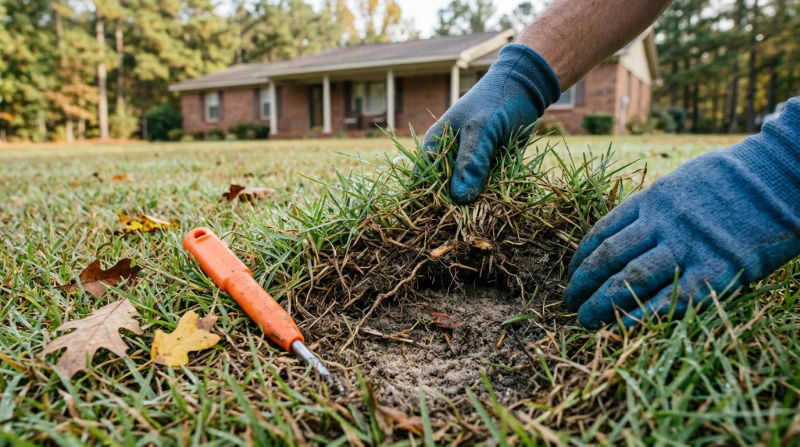
As a turf specialist with over a decade of experience in central Alabama, I’ve seen many lawns that look lush and green from a distance but are struggling up close. A homeowner might walk across their yard in Troy and notice it feels unusually spongy underfoot, almost like a thick carpet. Upon closer inspection, they see yellowing stems near the soil and find that water from the sprinkler seems to sit on top rather than soaking in. With the intense summer growth season easing and cooler October air settling in, now is the perfect time to evaluate your lawn for a common but often overlooked problem: overcrowding.
A dense, thick lawn might seem like the ultimate goal, but when turf becomes too crowded, it can choke itself out, leading to a host of underlying health issues. The hot, humid growing season in Troy can cause grass, especially aggressive varieties like Bermuda or Zoysia, to grow so thick that it restricts essential airflow and sunlight from reaching the soil surface. As growth slows this fall, these hidden problems become much easier to spot and correct before the lawn goes into winter dormancy.
Common Signs and Symptoms
Recognizing the early warnings of an overcrowded lawn is crucial for preventing more significant damage. Our technicians are trained to spot these subtle indicators during routine service visits. Here are some of the key overcrowded lawn symptoms Troy homeowners should watch for:
- A Spongy, Puffy Feel: When you walk across your lawn, does it feel soft and bouncy? This often indicates a thick layer of thatch - dead organic material - or an overly dense mat of living grass stems has built up above the soil line. A healthy lawn should feel firm underfoot.
- Increased Fungal Disease: A thick turf canopy traps moisture and humidity at the base of the grass blades, creating a perfect breeding ground for fungal diseases like brown patch and dollar spot. If you’re seeing more circular brown patches or discolored spots, poor air circulation from overcrowding is a likely contributor.
- Poor Water Infiltration: After a rainstorm or a cycle from your irrigation system, do you notice water puddling on the surface? A dense, compacted lawn prevents water from penetrating the soil, leading to runoff and wasted water. This also means your grassroots aren’t getting the deep watering they need.
- Yellowing or Browning at the Base: Part the grass blades and look down at the soil. In an overcrowded lawn, the lower parts of the stems will often be yellow or brown. This is a classic sign that sunlight isn’t reaching the base of the plant, causing the lower leaves to die off.
- Difficulty Mowing: If your lawn mower seems to bog down, struggle, or scalp the grass in certain areas, it’s a strong indicator that the turf is too thick. The mower wheels sink into the puffy turf, causing the blades to cut too low and damage the grass crowns.
- Shallow Root Growth: Dig up a small, inconspicuous plug of turf. If the roots are thin and only an inch or two deep, it’s a sign of a problem. A thick thatch layer can act like a barrier, preventing water, air, and nutrients from reaching the soil and forcing roots to grow within the thatch layer itself, making them vulnerable to drought stress.
- Visible Thatch Layer: This is one of the most definitive grass thinning signs. Thatch is the layer of dead and living shoots, stems, and roots that accumulates between the green vegetation and the soil surface. A thin layer (less than 1/2 inch) is beneficial, but anything thicker can strangle your lawn. This is a key point when considering thatch vs dense turf how to tell the difference: thatch is primarily dead, decaying matter, while dense turf refers to the excessive number of living grass stems. Often, the two problems occur together.
What Causes This Problem
Understanding why a lawn becomes overcrowded is the first step toward a long-term solution. These issues often develop over several seasons and are rarely caused by a single factor. In my experience, the problem usually stems from a combination of the following:
- Excessive Thatch Buildup: This is the most common cause. Certain grass types, particularly spreading varieties like Bermuda and Zoysia, are vigorous thatch producers. When the rate of organic matter production exceeds the rate of its decomposition by soil microbes, a thick, suffocating layer forms.
- Improper Cultural Practices: Mowing too high, infrequent mowing that allows the grass to become overgrown, or consistently leaving thick layers of clippings on the lawn can all contribute to thatch. Over-fertilizing, especially with high-nitrogen formulas, can also stimulate excessive top growth that quickly leads to a dense, puffy turf.
- Soil Compaction: Heavy clay soils, common in our region, are prone to compaction. Foot traffic, heavy mowers, and even years of rainfall can press soil particles together, reducing pore space. This restricts root growth and limits the availability of oxygen and water in the root zone, forcing grass to grow laterally and create a dense surface mat. Many properties in Troy, especially in neighborhoods with classic mid-century Ranch homes from the 1950s, sit on generous lots that have seen decades of activity. Over that time, the soil in high-traffic areas can become severely compacted without periodic intervention.
- Aggressive Grass Species: Some turfgrass varieties are genetically programmed to spread aggressively. While this is great for filling in bare spots, it can lead to overcrowding if not properly managed through regular dethatching or aeration.
When to Call a Professional
Once you’ve identified the symptoms of an overcrowded lawn, the next question is whether to tackle it yourself or bring in expert help. While a homeowner can use a heavy-duty dethatching rake for a very small, minor problem, addressing significant thatch and compaction typically requires specialized equipment and expertise.
This is where the standardized processes of an experienced crew become invaluable. When our technicians approach this issue, we’re focused on how to thin thick grass without bare spots or causing further damage. Here’s why professional intervention is often the best course of action:
- Accurate Diagnosis: Is the problem primarily thatch, or is it deep soil compaction? An experienced professional can properly assess the situation. Correctly identifying thatch vs dense turf and its underlying causes ensures the right treatment is applied.
- Professional Equipment: Commercial-grade equipment is far more effective than homeowner-grade tools. Our teams utilize two key machines:
- Core Aerators: These machines pull up plugs of soil, directly relieving compaction and creating channels for air, water, and nutrients to reach the root zone. The soil cores left on the surface help break down the thatch layer as they decompose.
- Verticutters (Vertical Mowers): A verticutter uses vertical blades to slice through the thatch layer, pulling the dead material to the surface for removal. Our trained technicians know how to set the blade depth precisely to remove thatch without damaging the healthy grass crowns, preventing widespread browning or bare patches.
- Efficiency and Safety: Dethatching and aerating an entire lawn is physically demanding work. A professional team has the manpower and organized workflow to complete the job quickly and safely, including the crucial step of cleaning up and hauling away all the thatch debris that’s pulled up.
Conclusion
A beautiful lawn is a healthy lawn, and health starts at the soil level. An overcrowded, spongy turf might look acceptable from the street, but it’s a sign of underlying stress that can lead to disease, drought damage, and overall decline. By learning to spot the common symptoms - from a puffy feel to poor water absorption - you can take action before the problem gets out of hand.
Fall is the ideal season in Troy to correct these issues. The cooler temperatures reduce stress on the grass during recovery, and addressing thatch and compaction now prepares your lawn to green up stronger and healthier next spring. Don't wait for small issues to become big, costly problems.
If you notice any of these signs, contact a local Lawn Care professional for an inspection.